Back to projects / 返回作品
FIELD NOTES / KANSAS CITY · SEPTEMBER 2026
在堪萨斯城,学习看宋代山水
A photographer’s field notes from The Nelson-Atkins Museum of Art: looking closely at people, mountains, and the space between them.
一次宋画游学,关于观看、留白,以及把所见带回自己的创作。
Photography & reflections by Peng · HEVENTA

01 / Before the paintings
临画忘言
I studied before the journey. Before the paintings, my words slipped away. The reading was done; the looking had to begin again. Perhaps I had filled my head a little too well, and left my eyes too little room.
行前有学,临画忘言。书读了不少,到了画前,还是得从头看起。功课做得满,眼睛倒该空一点。

Attributed to Ma Yuan · Composing Poetry on a Spring Outing (detail) / 传马远《春游赋诗图》行旅局部. Southern Song, 1127–1279; The Nelson-Atkins Museum of Art, 63-19.
CONTEXT / 语境
Song dynasty 宋代, 960–1279. Northern Song 北宋, 960–1127; Southern Song 南宋, 1127–1279. Shanshui 山水 literally means “mountains and water,” the Chinese term for landscape painting. These dates orient this visit; they are not a formula for identifying every painting.

Xu Daoning · Fishermen’s Evening Song (detail) / 许道宁《渔父图卷》局部. Northern Song, ca. 1039–1052; The Nelson-Atkins Museum of Art, 33-1559.
02 / Begin with a person
入画寻人
Before asking about the landscape, I look for the people within it. A glance, a gesture, a pause beside a table: small things lead the eye from one person to the next. The painting is quiet; the gathering seems to have plenty to say.
看山水,且先寻人。一顾一盼,一坐一立,目光便随之往来。画上无声,席间倒像有说不完的话。
LOOKING PROMPT / 观看提示 — Find one figure. Where does your eye go next? / 选一个人物,你的目光接着去了哪里?

Attributed to Ma Yuan · Composing Poetry on a Spring Outing (detail)
传马远《春游赋诗图》局部
Southern Song dynasty (1127–1279), ink and color on silk; The Nelson-Atkins Museum of Art, 63-19.
Beneath the pines, all eyes gather around a single brush. One person writes; the others watch. Apparently, gathering around someone else’s work is nothing new.
松下长案,众目归于一笔。有人落墨,有人凝神。原来,围观别人创作,古人也很在行。
Are Su Shi and Mi Fu here? / 东坡与米芾,也在座吗?
This scroll has sometimes been linked to the legendary Gathering in the Western Garden. In that tradition, the poet Su Shi writes and the calligrapher Mi Fu inscribes a rock. The subject of this particular scroll remains debated, however. The museum describes a spring poetry gathering without naming the figures.
此卷曾被解释为“西园雅集”,使人联想到东坡挥毫、米芾题石的风雅传说。然而画题尚有异说,馆方现以《春游赋诗图》著录,未为画中人逐一题名。不妨先看他们如何相聚,暂且不忙点名。
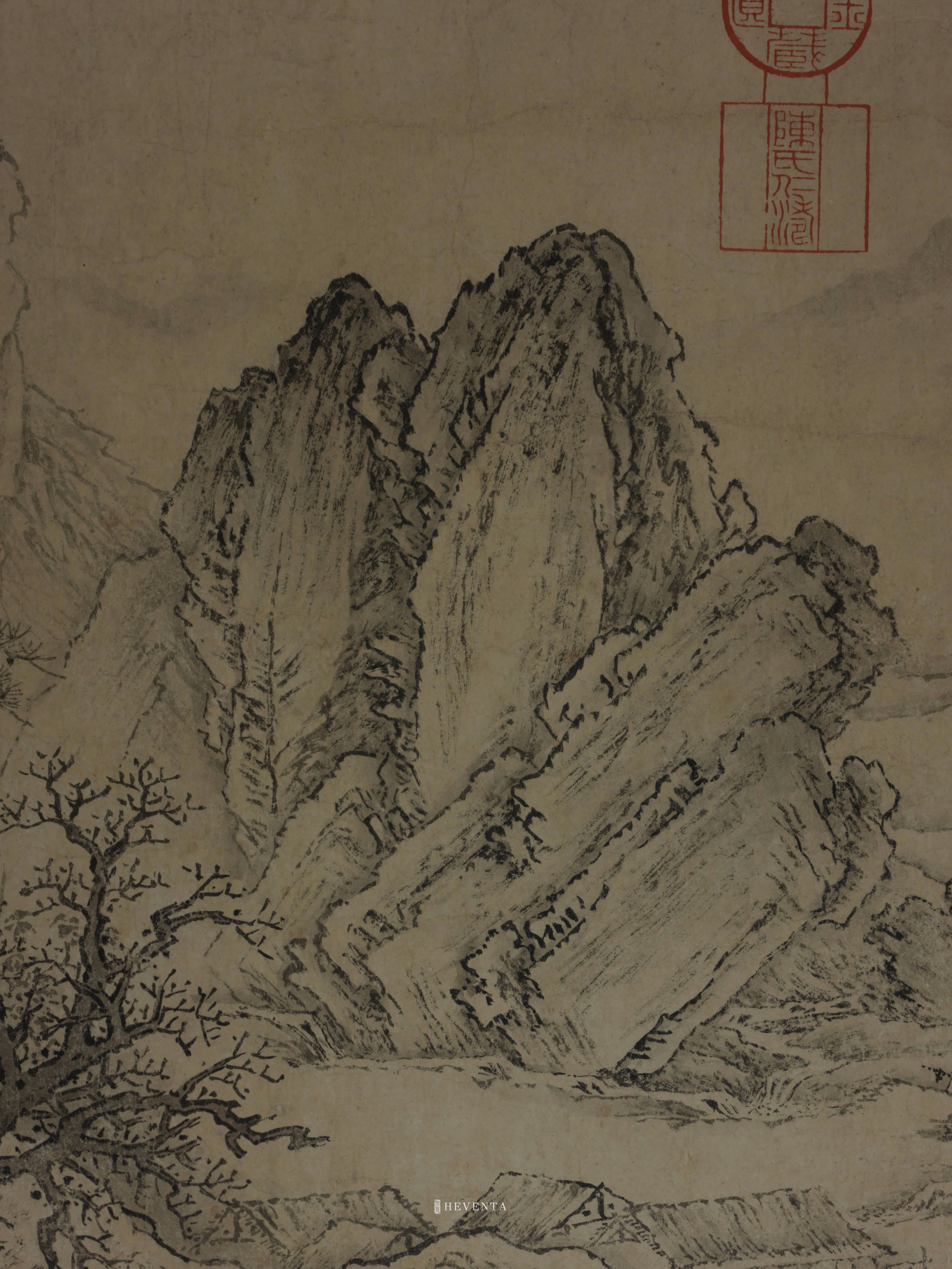
Following the ink through a mountain — photographed detail / 沿着笔墨看山石 · 局部
03 / Leave room to look
舟行水上,且留天地
Two small boats, a few strokes of water; the rest is left open. Looking longer, I find myself less eager to fill the frame. In my own photographs, perhaps I can leave a little room for the eye to wander.
两叶小舟,数笔水,余处皆空。看得久了,倒不急着把画面填满。轮到自己举起相机,也想留一寸余地,让目光自在来去。

Xia Gui · Twelve Views of Landscape (detail) / 夏圭《山水十二景图卷》局部. Southern Song, 1127–1279; The Nelson-Atkins Museum of Art, 32-159/2.
Liubai 留白 — leaving areas unpainted. Those areas can suggest water, mist, distance, or room for the viewer’s imagination; their role depends on the particular work.
04 / Looking, together
同看一卷,各得一趣
In the gallery, I met Dr. Wang (王老师), whose research focused on Guangsheng Temple. We looked and talked. One phrase stayed with me: 找气眼, a way of asking where a composition comes alive. We stood before the same work and noticed different things. Many years from now, I may need the books again; the pleasure of looking together will be easier to remember.
展厅遇王老师,边看边聊,记住一招:找气眼。同看一卷,各得一趣。多年以后,画史或须重读,那日共赏的欢喜,想来不易忘。
Our conversation also led beyond the Song landscapes, to Buddhist art elsewhere in the museum. The sculpture and mural shown here are separate works, from different periods.
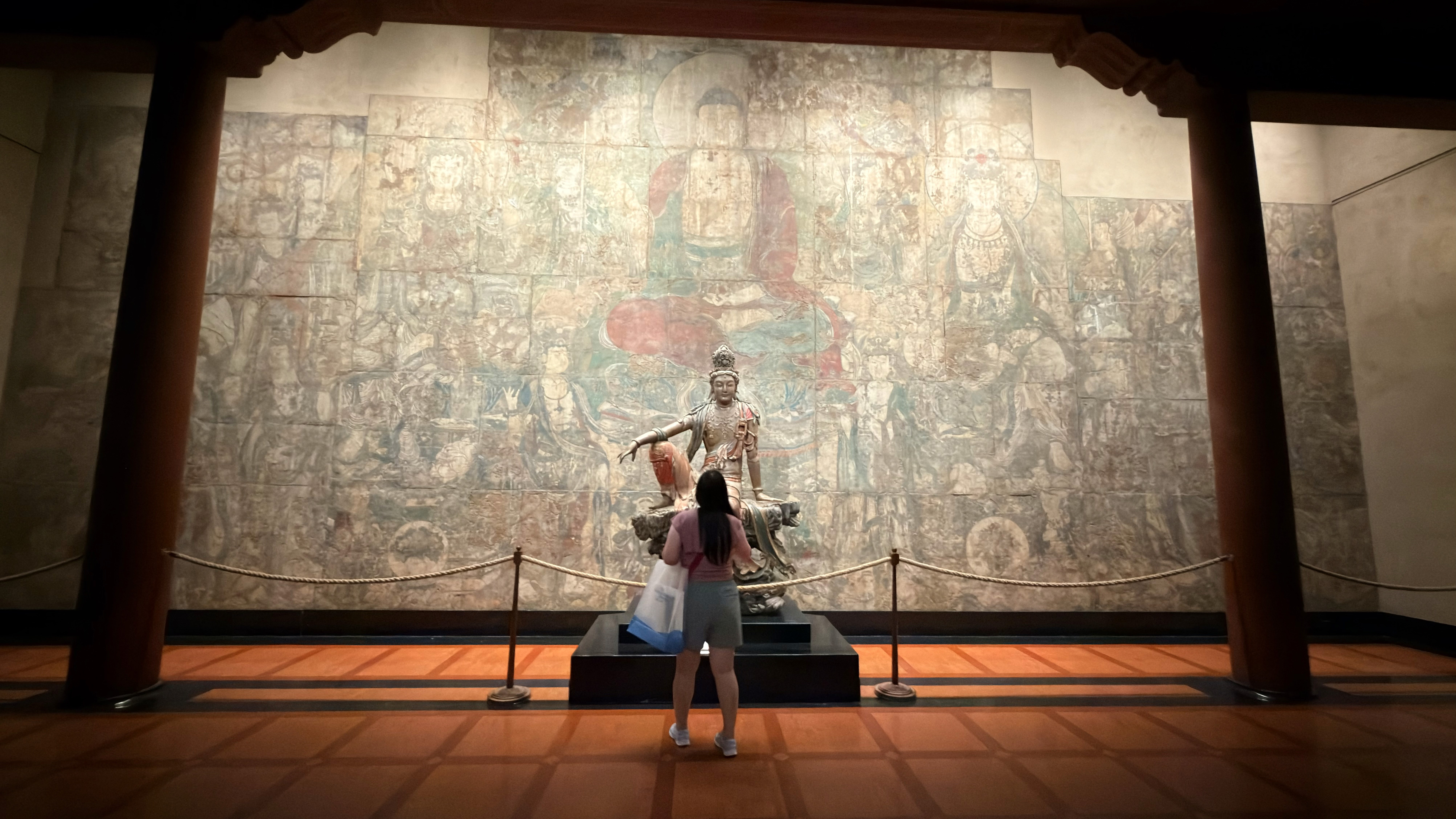

Beyond the Song landscapes / 山水展之外
Foreground: Guanyin of the Southern Sea 南海观音, Liao or Jin dynasty. Background: The Assembly of Tejaprabha 炽盛光佛会图, early 14th century, from Guangsheng Temple, Shanxi. Collection: The Nelson-Atkins Museum of Art. Photograph by Peng.
05 / Back to making
所见入心,所学入镜
For my next exercise, I want to photograph one subject twice: once filling the frame, once leaving more space. Which holds the eye longer? I will let the photographs answer. What I learn from looking should eventually find its way into the choices I make.
下回试拍,同一景物,一幅取满,一幅留空。哪幅耐看,交给照片作答。所见入心,所学终须入镜。
SOURCES & CREDITS / 来源与说明
Music: Zuiyu Changwan《醉渔唱晚》— performed and recorded by Charlie Huang (Charles R Tsua), 2013. Recording unchanged.
Museum artworks photographed on site. Some painting details remain unidentified; personal observations are distinguished from museum identifications. Identified works are credited where verified. This is Peng’s independent study, not an official museum guide.
For photography & creative collaborations / 摄影与创作合作